2026 Palm Beach Single Family Office Forum
4-Days That Redefine the Future of Wealth, Legacy, and Strategy
March 16-17-18-19, 2026 | Hosted by Angelo Robles in Collaboration With Bryant Hayward & Alexander Galambos
2026 Palm Beach Single Family Office Forum: 4-Days That Redefine the Future of Wealth, Legacy, and Strategy
March 16-17-18-19, 2026 | Hosted by Angelo Robles in Collaboration With Bryant Hayward & Alexander Galambos
50 Families. Four Days. The Week That Redefines How You Think About the Next Thirty Years.
You've built something extraordinary. The question is whether it survives contact with what comes next.
This gathering exists because that question cannot be answered alone.
Not through research. Not through advisors. Not through the echo chambers of conventional wisdom that tell you everything is fine, that systems self-correct, that the future will resemble the past.
You know better.
You've noticed the signals. The way capital is reorganizing itself. The way sovereign nations are quietly building parallel systems. The way artificial intelligence crossed the threshold from tool to autonomous agent—and how few people seem to grasp what that actually means.
The families who navigate the next thirty years will not be those with the most capital. They will be those with the clearest thinking, the most adaptive structures, and proximity to peers who see what they see.
That proximity gets built here.
I. THE THESIS
Systems collapse slowly, then all at once.
Two types of families are diverging at accelerating speed.
The first operates with yesterday's assumptions: single-jurisdiction domicile, organizational bloat justified as "stability," quarterly investment reviews analyzing backwards-looking financials, security protocols designed for 2015 threat models, and competitive moats built on human cognitive advantage—just as intelligence becomes commoditized and free.
The second has rewritten the operating system entirely: multi-jurisdictional fortress structures that survive regime change, three-person offices augmented by AI agents outperforming thirty-person teams, real-time portfolio intelligence replacing monthly reports, security architecture treating family members as high-value state-level targets, and investment frameworks distinguishing businesses that strengthen as AI advances from those that evaporate when knowledge work costs nothing.
The gap between these families is no longer measured in basis points. It is measured in whether your wealth survives the next regime change. Whether your $500 million is actually protected—or just guarded by your assistant's iPhone password and your estate attorney's Dropbox account. Because while you have dynasty trusts and multi-signature custody, your entire operation runs on Gmail and DocuSign accessible to anyone who can spear-phish your analyst or AI-clone your voice from a YouTube interview. Thirty billion-dollar family offices were breached in the last eighteen months—wire transfers rerouted, trust documents sold to tax authorities, none of them knew until it was too late. Whether your competitive advantages compound or evaporate when AI replicates them at zero cost. Whether you can get your daughter in front of the world's best oncologist in one week when she needs it—not six months. Whether you have access to the people who solve problems your general counsel doesn't know how to approach: international legal crises that get resolved before they become public, reputational fires that get contained, closed investment opportunities that somehow reopen.
This forum exists for families operating at that level.
Over four days in Palm Beach, you will sit with the architects of these systems. Not consultants pitching services. Not academics theorizing. The operators who have built three-person offices managing $10B+. The fixers—former intelligence operatives, medical concierges with direct lines to department heads at Mayo and Sloan Kettering, crisis managers who've worked for sovereign wealth funds and heads of state—who get called when impossible becomes necessary. The strategists who structure five-jurisdiction fortresses where Switzerland holds the wealth, New Zealand provides the bolt-hole, and South Dakota trusts protect capital for a thousand years. The investors who have rewritten their entire decision framework because AI just commoditized every moat you paid 30x earnings for.
While the first family type obsesses over quarterly earnings multiples and discount rates, believing financial engineering compounds forever—the second recognizes the upcoming transition from financial assets to hard assets that will dominate the next 25 years.
The Great Financialization is reversing. Mining represents 1% of the S&P 500—the lowest concentration in recorded history—at the precise moment AI requires copper, lithium, rare earths, and energy infrastructure at scales that don't exist. The math is simple: intelligence becomes free, materials remain scarce. Every AI model requires physical substrate—data centers, chips, power—that cannot be coded into existence.
The sophisticated families aren't debating whether this transition happens. They're positioning for it. They understand what occurs when Western governments carry 120% debt-to-GDP ratios, have offshored industrial capacity, and need to recapitalize. When the same administration that weaponized SWIFT and froze $300 billion in Russian reserves holds 8,000 tons of gold on its balance sheet. The United States holds 8,000 tons of gold on its balance sheet while owing $35 trillion—the math becomes unavoidable: a gold revaluation from $4,200 to $15,000+ per ounce would generate trillions in balance sheet recapitalization—not enough to eliminate the debt, but enough to reset the fiscal trajectory when combined with austerity measures governments can't otherwise impose.
While the legacy families optimize portfolios for the last cycle, the diverging families are accumulating the hard assets that enable the AI revolution and survive the currency reset. Financial assets assume permanence. Physical assets assume governments do what they always do.
You will see the organizational charts. The vendor ecosystems. The agent architectures. The breach scenarios at the $500M+ level. The actual trust structures. The decision matrices for when intelligence is no longer scarce. The relationships that matter when your lawyer, doctor, and banker can't help you.
This is not theory. These are the operational playbooks families are deploying right now—while others are still running 2019 strategies in a world that no longer exists.
The families who compound wealth across generations do not assume permanence—they engineer for continuity. They do not optimize for current conditions—they position for structural transformation. They do not react to crisis—they build architectures that turn uncertainty into competitive advantage.
That is what the next five days deliver.
III. THE ARCHITECTURE: FIVE DAYS OF STRUCTURED INTELLECTUAL COLLISION
This is not a conference. Conferences exist to broadcast information. This exists to reconstruct mental models.
March 16-19. 50 verified single family offices. Zero fluff.
What makes five days non-negotiable: Trust requires time. The conversations that matter—about succession anxiety, allocation conviction, structural paranoia—don't happen in coffee breaks. They happen on day three, after shared meals, after someone says something that challenges your assumptions, after you realize the person across from you is operating at your level and grappling with identical questions.
The families who leave this gathering don't leave with pitch decks. They leave with relationships that compound over decades.
MONDAY, MARCH 16 | THE OPENING
Evening Reception
We begin with calibration. 50 families. Intimate setting. The energy of walking into a room and knowing within minutes: these are serious people doing serious work.
No presentation. No agenda. Just the space to connect before the intellectual intensity begins.
You'll know by the end of the evening whether the selection process worked. It always does.
TUESDAY, MARCH 17 | THE AWAKENING
9AM – 4PM
Angelo Robles's State of the System Address
We begin with total clarity.
A synthesis of forces converging to rewrite the operating rules: the fracturing of monetary hegemony, the industrialization of intelligence, the return of ideological competition, and what it means operationally for families managing capital across generational time horizons in a world where the old certainties no longer hold.
This is not futurism. This is pattern recognition applied to present conditions—delivered by someone who has spent decades studying how systems fail, how families adapt, and what separates those who see discontinuity coming from those who extrapolate from the recent past.
SESSION: "When Intelligence Is Free But Gold Isn't: The Transition from Financial to Hard Assets"
When mining represents 1% of the S&P 500—the lowest concentration in recorded history—at the precise moment AI buildout requires copper, lithium, and rare earths at scales that don't exist, when every data center enabling free intelligence demands physical substrate that cannot be coded into existence, when gold and silver trade at historic lows relative to financial assets despite industrial demand surging and monetary instability accelerating—you are not watching normal market volatility.
You are watching the structural reversal of a 40-year cycle.
What does it mean when the same financial assets that compounded for four decades now face headwinds that last 25 years? When the commodities written off as "old economy" become both the bottleneck for the AI revolution AND the monetary hedge when fiat currencies destabilize? When industrial metals enable the infrastructure buildout while precious metals protect against the currency reset?
This is not a tactical rotation. This is a generational regime change where physical assets separate from paper claims.
One of the world's leading hard asset investors will walk through the framework sophisticated families are deploying right now: how much to reposition, which commodities matter, what the timeline looks like, and why waiting for confirmation means you've already missed the transition.
No theory. The actual allocation decisions being made at the $10B+ level.
The questions this session answers:
- Is this 5% of the portfolio or a complete reconstruction?
- Which hard assets enable AI infrastructure vs. protect against monetary reset?
- What's the timeline for this transition—5 years or 25?
- How do you position when the thesis is correct but timing is uncertain?
- What are the second-order effects families aren't considering?
SESSION: "The Battle of Ideas—"Executive Order 6102 for the Digital Age: Will Governments Revalue Gold to Escape Debt Traps?"
When Western governments carry 120% debt-to-GDP ratios with no path to fiscal discipline, when the same administration that weaponized SWIFT and froze $300 billion in Russian reserves demonstrates currency can be weaponized unilaterally, when the United States holds 8,000 tons of gold on its balance sheet while owing $35 trillion—the math becomes unavoidable: a gold revaluation from $4,200 to $15,000+ per ounce would generate trillions in balance sheet recapitalization—not enough to eliminate the debt, but enough to reset the fiscal trajectory when combined with austerity measures governments can't otherwise impose.
This is not conspiracy theory. This is what governments do when debt becomes unsustainable and printing more currency risks hyperinflation.
Roosevelt did it in 1933. Nixon did it in 1971. Both times, the families holding physical assets were protected. The families holding paper promises were not.
What does it mean when the same monetary system that has operated since Bretton Woods faces structural breakdown? When central banks are net buyers of gold for the first time in 50 years—not because they're hedging, but because they're preparing? When Bitcoin exists as an alternative but governments control gold reserves that can be revalued by executive order?
Do you position for this as a tail risk—or as the logical endpoint of debt dynamics that have no other resolution? If it happens, does it happen gradually through market forces—or suddenly through coordinated sovereign action? And when governments that have demonstrated willingness to freeze accounts, mandate asset disclosure, and weaponize payment systems decide to recapitalize—what protections exist for concentrated family wealth?
Two exceptional strategists. Two competing frameworks. One argues sovereign gold revaluation is inevitable within a decade—the only mathematical solution to debt that cannot be serviced or inflated away. The other argues this overestimates political will and underestimates how long broken systems can persist.
Direct engagement with the question that haunts every sophisticated family office: Are you positioned for normalcy—or for the moment governments do what they always do when the debt trap closes?
SESSION: "The Battle of Ideas—"The Rise of Collectivist Ideology in America: Passing Fashion or Structural Renegotiation?"
When wealth taxes move from fringe policy to mainstream political platforms, when Modern Monetary Theory enters Federal Reserve discussion, when generational polling shows fundamental shifts in attitudes toward private property—you are not watching a political cycle.
You are watching the early stages of ideological renegotiation.
What does it mean for capital allocation? For multi-generational planning? For the social contract that has allowed concentrated wealth to operate relatively unmolested for decades?
Two exceptional thinkers. Two competing frameworks. Direct engagement with the question that keeps family office principals awake: Is this still an environment where generational wealth can be built and preserved?
SESSION: "Escape Velocity—Building Independence When Your Sovereign Becomes Hostile"
The most dangerous assumption a family office can make is that the nation-state protecting your wealth today will continue to do so tomorrow.
The Romanovs thought their dynasty was eternal. The kulaks thought their farms were secure. The Jews of Weimar Germany thought their prosperity was protected by law. In each case, the warning signs were visible years before the collapse—but the cost of seeing them was abandoning everything familiar.
This is sovereign risk: the probability that the government under which you operate will confiscate, devalue, or destroy your wealth through policy, incompetence, or malice. And it is no longer an emerging market problem. It is a universal condition.
Escape velocity is the minimum level of independence required to survive the collapse of any single nation-state. If one hundred percent of your wealth, identity, and legal standing is tied to one jurisdiction—you have zero escape velocity. You are a passenger, not a pilot. And when the system destabilizes, passengers do not get to choose the outcome.
This session presents the three-layer architecture families deploy to build genuine sovereignty: jurisdictional diversification beyond golden visa theater (genuine residency, legal standing, and social capital in multiple stable jurisdictions where your family can actually live, work, and rebuild), asset uncorrelation from systemic risk (physical metals in vaults you control, Bitcoin in cold storage governments cannot access, productive land and energy assets, businesses with geographic portability), and human capital resilience (the relationships across geographies and power structures that matter when borders close and institutions fail).
Here's the asymmetry: Acting too early costs money. Acting too late costs everything.
SESSION: "Tax Is Noise. Structure Is Everything."
Most families obsess over tax rates. They chase jurisdictions. They celebrate saving 5% while their capital remains vulnerable to lawsuits, divorces, regime changes, and generational dissipation.
Angelo Robles will present the framework ultra-high-net-worth dynasties actually use: optimizing for capital survival across centuries, not quarterly tax savings. The Rockefellers pay $100M+ in lifetime taxes and remain billionaires for five generations. Why? Ninety percent of their wealth sits in dynasty trusts that last 1,000 years—protected from creditors, ex-spouses, political upheaval, and estate erosion.
You're asking "Which country has low taxes?" when the question should be "How do I ensure my capital survives the next century regardless of what happens?"
This is not estate planning theater. This is the structural architecture that separates families who compound wealth across generations from those who dissipate it within two.
Families will see the trust structures, jurisdictional layering, and succession frameworks that have protected dynastic wealth through wars, revolutions, and political realignments. The difference between defensive tax planning and offensive capital preservation.
SESSION: "Infrastructure for Crisis: Who to Call When Systems Fail"sometimes elegantly through planning, sometimes violently through crisis."
The infrastructure required when traditional systems fail is not found in compliance manuals. It is found in the quiet professionals who have spent decades handling third-rail problems: regulatory investigations, family disputes that threaten succession, reputational crises, jurisdictional complexity, the gray spaces where discretion matters more than documentation.
This session is about knowing who to call, what they actually do, and why relationships built before crisis are exponentially more valuable than relationships built during crisis.
WEDNESDAY, MARCH 18 | THE CRUCIBLE
Full-Day Programming
This is the intellectual center of gravity. Sessions designed not to inform but to fundamentally shift how you think about the next decade.
SESSION: "The Conviction Stock Portfolio—Why the Smartest Family Offices Are Making Concentrated Bets"
The families who compound generational wealth don't just preserve capital. They make concentrated stock bets at structural inflection points—when the economic thesis is clear but consensus hasn't fully priced it yet.
Family principals and investors who have generated significant returns from concentrated stock positions in Tesla, Amazon, Bitcoin, Robinhood, and similar outliers will present:
- The economic thesis that drives conviction in specific stocks—regardless of how long they've been public
- How structural factors (regulatory shifts, monetary debasement, network effects, monopoly formation) create asymmetric stock opportunities
- Position sizing based on thesis conviction rather than conventional risk management
- What signals confirm the thesis is playing out versus breaking
- Where they're seeing similar patterns today—actual stock names, actual theses
This isn't about hot tips. It's about teaching pattern recognition—the economic architecture that creates outsize stock returns so families can develop frameworks for identifying the next asymmetric opportunities themselves.
SESSION: "Inside the Machine—A Single Family Office CEO on Sovereign AI, Real Estate, and What Actually Works"
Most family office content is theoretical. This session is pure operational reality.
A single family office CEO managing a dynamic multi-generational family will open the vault on how elite offices actually operate:
Generational Real Estate Strategy: How the family structures properties to work now and in fifty years—not as asset class rotation, but as multi-generational anchors.
Sovereign AI Infrastructure: How they built proprietary AI systems that never touch public cloud—keeping IP, family data, and strategic intelligence completely air-gapped from AWS, Google, Microsoft.
Cash Management Reinvented: Where to actually park $500M in liquidity when Treasuries yield negative real returns—the actual platforms and structures being used today.
The Third-Rail Thesis: How he evaluates deals and sectors that work today and will still work in ten years—regardless of political regime, monetary system, or technological disruption.
Vendor Negotiation at Scale: How to negotiate with private banks, custodians, and technology providers when managing billions—getting terms and pricing unavailable to smaller offices.
Build vs. Buy: When to build proprietary solutions versus license external platforms—the actual framework and mistakes made along the way.
Leading Multi-Generational Families: Managing expectations, succession tensions, and strategic alignment across generations with different values and risk tolerances.
This is not a keynote. This is an operating manual from someone living it every day.
SESSION: "Why Your Family Doesn't Live in One Country Anymore—The Five-Jurisdiction Fortress"
Single-country domicile is a vulnerability masquerading as simplicity. You're concentrated. One policy shift, one election, one currency collapse, one civil disruption—and your entire structure is exposed.
Angelo Robles will present the multi-jurisdictional architecture that protects dynastic wealth across generations and regimes: citizenship layering for mobility and access, residency positioning for tax efficiency and lifestyle, asset domicile for rule of law and perpetuity, operational bases for business execution, and bolt-hole jurisdiction for existential insurance.
Why does Peter Thiel own a remote New Zealand ranch when he lives in Los Angeles? Why do the Rockefellers structure 90% of their wealth through South Dakota trusts that last 1,000 years? Why is Switzerland—with its 40% tax rates—still the first choice for generational wealth preservation? Why are Norwegian billionaires fleeing to Dubai while Silicon Valley CEOs are moving the opposite direction? And why is Uruguay, of all places, called "the South American Switzerland"?
This is the operational blueprint: which jurisdictions for which purposes, how to layer structures without triggering exit taxes or residency conflicts, why Singapore's authoritarian competence beats democratic chaos for 20-year horizons, where to hold assets versus where to sleep at night, and how to build the fortress architecture that turns geopolitical uncertainty into competitive advantage.
Families will see the decision matrix, jurisdictional pairings, and the practical framework for geographic anti-fragility that ultra-high-net-worth families actually deploy.
SESSION: "The $50 Million Mistake—Why Your 'Durable Moats' Are About to Evaporate"
You built your portfolio on companies with competitive advantages: brand equity, proprietary processes, analytical expertise, scale economies, knowledge workers. Moats that took decades to build.
AI commoditizes all of it in 18 months.
Angelo Robles will present the investment framework that separates businesses that strengthen as AI advances from those that collapse when intelligence becomes free. Because here's what most family offices are missing: quarterly growth analysis is already too slow. Traditional runway assumptions—ten-year TAM expansion, geographic rollouts—compress to three years or vanish entirely. And the moats you paid 30x earnings for? Process advantages, analytical edge, expert networks—AI replicates them at zero marginal cost.
So what survives? Data moats that self-reinforce. Compute access that creates structural bottlenecks. Energy partnerships when inference demands exceed supply. Human judgment in domains where catastrophic error ends businesses. And the critical metric everyone ignores: AI Leverage Ratio—revenue per employee going exponential, or remaining linear while competitors disappear your margin.
The core question for every position in your portfolio: Does this business get stronger or weaker as AI gets 10x better next year? Because that's not hypothetical. That's November 2026.
Families will see the revised decision matrix, the new supply constraints, where traditional valuation models break completely, and why cash generation matters MORE in the AI era—not less. This is portfolio defense disguised as offense.
SESSION: "Your $500 Million Is Protected by Your Assistant's iPhone Password"
You have dynasty trusts. Multi-signature custody. Swiss vaults. Offshore structures. Legal entities layered across jurisdictions.
And your entire family office runs on Slack, Gmail, and DocuSign—accessible to anyone who can phishing-spear your analyst, compromise your assistant's iCloud, or socially engineer your estate attorney's paralegal.
The cybersecurity reality ultra-high-net-worth families refuse to confront: You are not a hard target. You are a concentrated target with consumer-grade defenses. Thirty billion-dollar family offices have been penetrated in the last eighteen months—wire transfers rerouted, portfolio positions leaked to activist shorts, confidential structuring documents sold to tax authorities. None of them knew until it was too late.
The threat is not some teenager in a basement. It's AI-enabled social engineering that studies your travel patterns from Instagram, synthesizes your voice from YouTube interviews, and targets the assistant who just got divorced. It's your nephew's Telegram messages that mentioned cryptocurrency keys. It's the estate attorney storing trust documents in Dropbox. It's the vendor portal giving your landscaper's HR system access to your home address and family schedules.
You think two-factor authentication protects you? AI voice cloning defeated that last year. Air-gapped cold storage? Every person who knows the key location is a social engineering target.
This session reveals what actual breach scenarios look like at the $500M+ level, where the real attack surfaces hide, and the operational protocols that separate families who lose everything from families who remain untouchable. This is not about buying more software. This is about threat modeling when you are the threat model.
SESSION: "The Future of Real Estate—From Physical Assets to Infrastructure for AI and Energy"
Real estate has been the anchor asset class for generational wealth for centuries. That paradigm is being rewritten.
As artificial intelligence demands exponential compute power, as energy becomes the fundamental currency of economic sovereignty, as remote work reorganizes population distribution—what does "real estate" even mean?
Data centers as critical infrastructure. The families who own the physical layer where AI computation happens control access to the most valuable economic resource of the next thirty years.
Energy production and storage. Solar farms, battery facilities, microgrids—real estate that generates power, not just occupies space.
Industrial and logistics networks. The backbone of physical production in an increasingly digital economy—where robots need buildings and autonomous vehicles need depots.
The death of traditional office? What happens to CBD real estate when knowledge work becomes location-agnostic and AI handles what junior professionals once did?
This session brings together families and operators at the frontier of real estate transformation—not defending the old model, but building the new one.
SESSION: The Battle of Ideas—"Gold, Bitcoin, Stablecoins—Which Survives the Reset?"
In a world where code increasingly replaces law, where energy is the ultimate currency, and where nations compete through technology rather than territory—what actually preserves wealth across systemic transitions?
- Gold: History's verdict. Physical. Sovereign-grade. But cumbersome, jurisdiction-dependent, and difficult to transact at scale.
- Bitcoin: Digital scarcity. Protocol-based sovereignty. Immune to debasement. But vulnerable to energy infrastructure disruption and regulatory assault.
- Stablecoins: Programmable liquidity. Instant global settlement. Protocol-native. But structurally dependent on the legacy banking system they claim to replace.
Three asset classes. Three philosophies. Three families who have made nine-figure allocations into each.
This is conviction backed by capital—families going on record with their positioning and the frameworks that drive it.
SESSION: "Venture Capital's Next Evolution—The Industrialized Creation Model"
Venture capital as traditionally practiced is dying. The "spray and pray" model of funding ninety failures to find one outlier is capital-inefficient and intellectually lazy.
The future belongs to industrialized venture—families and operators who are de-risking early-stage creation through operational scaffolding, vertically integrated support, and thesis-driven deployment.
Instead of funding random founders with pitch decks, they are building companies from first principles:
- Identifying market failures or emerging infrastructure needs
- Recruiting technical talent and pairing them with operational expertise
- Providing capital, yes—but also distribution, hiring pipelines, regulatory navigation, and go-to-market frameworks
This is not venture capital. This is company construction at industrial scale.
SESSION: "Rise of the Robots—Investing in AI, Robotics, and the Coming Production Revolution"
If China dominates robotics, advanced manufacturing, and energy infrastructure while America leads in software and AI, you do not have equilibrium. You have asymmetric dependency.
Can America remain economically sovereign if it cannot manufacture its own defense systems, semiconductor supply chains, or energy infrastructure?
For family offices, the question is sharper: Where are the asymmetric opportunities versus the narrative-driven speculation?
Families who deployed early into robotics companies, AI chip infrastructure, and autonomous systems will present:
- Actual company names and investment theses
- What worked and what failed
- Where the real alpha is versus where capital is blindly following headlines
This is not theory. This is capital deployment at the frontier of the most consequential technological shift in a century.
SESSION: "Building the AI Family Office—Hybrid Intelligence Architecture"
The family office of 2035 will be unrecognizable.
Lean teams augmented by proprietary AI. Automated compliance, risk monitoring, portfolio rebalancing. Decision-support systems synthesizing data faster than human cognition allows. Predictive modeling for succession, tax optimization, generational wealth transfer.
The question is not whether AI transforms family office operations. The question is what you build internally, what you license externally, and what remains irreducibly human.
Families already operating AI-native offices will present:
- Their tech stack (off-the-shelf versus proprietary)
- Implementation failures and unexpected breakthroughs
- What actually generates ROI versus what is expensive distraction
- The human-AI interface and how decision-making authority is structured
PEER SESSION: Families Go On Record
Four single family offices take the stage to answer the questions no one asks publicly:
- "If you could only hold three asset classes through the next systemic crisis, what would they be?"
- "What allocation decisions are you making that your peers think are insane?"
- "Where have you been catastrophically wrong—and what did you learn?"
- "What operational change in the last three years made the biggest difference?"
No posturing. No theory. Just families speaking with the candor that only exists among peers who understand the weight of the decisions you carry.
Evening: Private Dinners
Small groups. Curated settings. Conversations that stretch late into the evening because someone asked a question that unlocked something you'd been circling for months.
This is where the real connections form—not in sessions, but in unstructured time where trust is built naturally and intellectual chemistry reveals itself.
THURSDAY, MARCH 19 | THE RECKONING
Private Estate | Luncheon Through Evening
Stunning oceanfront setting. The most beautiful venue of the gathering—because the hardest conversations require space, beauty, and calm.
SESSION: "The Coming Fracture—Monetary Excess Meets Ideological Renegotiation"
Every empire decays from within before being conquered from without.
What institutional fragility worries you most about the United States? Not as politics, but as allocation strategy.
When the "risk-free asset" yields negative real returns indefinitely, when major foreign holders actively diversify away from U.S. debt, when BRICS nations build parallel payment systems—you are not witnessing isolated events.
You are witnessing coordinated exit from dollar hegemony.
How do families engineer escape velocity?
Multi-jurisdictional structures. Physical gold in non-U.S. vaults. Citizenship optionality. Protocol-based assets beyond state control. Energy infrastructure independent of centralized grids.
This is not paranoia. This is prudent construction for asymmetric risk.
SESSION: "The Fixers—When Your Lawyer, Doctor, and Banker Can't Help You"
Your daughter needs to see the world's best oncologist. The wait is six months. You have her in the room in one week.
Your son is detained in Dubai over a business dispute that could mean imprisonment. He's on a plane home in 72 hours—charges dropped.
Your co-investment opportunity in the most sought-after private fund closed three weeks ago. You're in the next closing.
Your family name appears in leaked documents that could trigger investigations across three jurisdictions. The story never runs, the documents disappear, and no authority ever makes contact.
This is not what wealth managers do. This is not what estate attorneys handle. This is not what your Chief of Staff coordinates. This is what fixers do—the invisible network of specialists who solve problems that don't have public solutions.
They are former intelligence operatives who know which borders can be crossed and which can't. They are medical concierges with direct relationships to department heads at Mayo, Sloan Kettering, and Cleveland Clinic. They are crisis managers who've contained reputational fires for sovereign wealth funds and heads of state. They are the people who get called when your general counsel says "I don't know how to fix this."
This session brings three of them into the room—no names, no business cards, no slides. Just the operational reality of what's possible when you have the right phone number. How medical triage actually works at the $500M+ level. How international legal crises get resolved before they become public. How access to closed opportunities really happens. And why the most valuable relationships your family office maintains are with people whose expertise you hope to never need.
Because when the impossible becomes necessary, you don't want to be figuring out who to call.
PEER SESSION: Real Families, Real Positioning
Four single family offices go on stage:
- "What does 'safe' mean to you in 2026?"
- "Where do you park liquidity if Treasuries aren't risk-free?"
- "How are you thinking about physical location and jurisdictional risk?"
- "What are you building that has nothing to do with returns?"
Unfiltered. Unvarnished. The thinking that shapes billions in real allocation decisions.
Afternoon: Unstructured Time
No sessions. No programming. Just exceptional setting, great food, and space for spontaneous conversations that often prove more valuable than any scheduled content.
Evening: Cocktails and Open Conversation
The sun sets over the Atlantic. Conversations flow. This is where friendships form, where strategic partnerships begin, where you realize the real value isn't what you learned—it's who you met.
IV. WHAT MAKES THIS DIFFERENT
1. Peer-to-Peer Architecture
The majority of voices on stage are family principals and family office CEOs managing real capital. Not consultants selling services. Not academics theorizing. People who live the consequences of their decisions.
2. The Battle of Ideas Format
We don't seek consensus. We seek clarity. Competing frameworks in direct collision—because the best thinking emerges from intellectual tension, not echo chambers.
3. 50 Families. Verified.
Every attendee manages or serves a verified single family office. The selection process is rigorous. The result is signal density that doesn't exist anywhere else.
4. Four Days, Not Two
Trust requires time. The conversations that matter happen on day three, after shared meals, after unstructured time, after you realize the person across from you operates at your level.
5. Limited, Strategic Sponsors
A small number of carefully selected sponsors support specific sessions—firms and platforms that are themselves building the infrastructure families need. Their participation adds substance, not distraction.
V. WHO BELONGS
-
This gathering is designed for families and their offices who are navigating complexity at the highest levels—managing significant wealth across generations while adapting to a world in fundamental transition.
You'll find extraordinary value here if:
- You manage or serve a family office and are focused on building structures that endure across generations
- You're grappling with questions about how artificial intelligence, monetary shifts, and geopolitical realignment will reshape wealth preservation
- You value deep, substantive conversations with peers who share your level of responsibility and strategic thinking
- You're actively seeking insights from families who have confronted similar challenges—succession, allocation strategy, operational structure, jurisdictional positioning
- You believe that the most valuable insights come from candid exchange among peers, not from consultants or service providers
- You're intellectually curious about competing perspectives and frameworks, even when they challenge your current thinking
- You recognize that the relationships formed over five days of proximity often prove more valuable than any single session or speaker
This gathering may not be the right fit if:
- You're primarily seeking to promote services or products
- You prefer large-scale networking events over intimate, extended peer gatherings
- You're looking for a quick conference experience rather than a multi-day immersion
The selection process is thoughtful. Angelo Robles personally reviews each application to ensure the gathering maintains the depth, focus, and peer-quality that past attendees consistently cite as its defining characteristic.
If you're uncertain whether this is right for you, we encourage you to reach out. The goal is to bring together sixty families who will genuinely benefit from and contribute to this unique gathering.
Questions about fit or the application process? Contact us at [email/link] - we're happy to discuss whether this gathering aligns with what you're building.
VI. WHAT 2025 ATTENDEES SAY
"Given the saturation of the family office conference market and the constant noise of information overload, chapeau to Angelo for delivering a true standout: a four-day single family office event that offered wall-to-wall wisdom, thought-provoking dialogue, and relevant, often challenging debate. Look at the quality of the attendees—true single family offices, not spectators. Their active engagement over multiple days is the ultimate testament to the serious value Angelo delivered."
— Jonny Haycock, VON GREYERZ
"Out of the many family office gatherings I've attended, this one stood out as the most thoughtful and impactful by FAR. The caliber of the people you brought together—insightful, kind, genuinely engaging—was truly exceptional."
— Gideon Pfeffer
"Just a heartfelt thank you for an absolutely outstanding conference. I was thoroughly impressed by every aspect—the program, the venue, the speakers, the caliber of attendees—and your indefatigable energy in bringing it all together. Truly one of the finest gatherings I've attended in years."
— John Messervey
"That was a wonderful REAL single family office conference!"
— Marvin Boyd, Family Principal
"Stellar event—truly a gift to attend and meet such quality people from all over the world."
— Emily Bouchard
"We're honored to stand alongside some of the world's most influential and forward-thinking families. Thank you, Angelo Robles, for hosting the exclusive Palm Beach Single Family Office Forum—a premier gathering where visionary families come together to connect, strategize, and shape the future of legacy."
— Aileen & Katrina Castellano, Family Office
VII. THE APPLICATION
This gathering is limited to 50 verified single family offices.
Application does not guarantee admission. Angelo Robles personally reviews every submission to ensure the gathering maintains its intellectual density and operational focus.
The application window closes when 50 families are confirmed.
VIII. THE QUESTION
You've built something extraordinary. The question is whether it survives contact with what comes next.
The families who endure are not the wealthiest. They are the most intellectually honest, operationally paranoid, and structurally adaptive.
The architecture for that endurance gets built here.
Four days. 50 families. Palm Beach.
March 16-19, 2026.
For inquiries about year-round membership in Angelo Robles's SFO Continuity, visit [Click Here].
Wealth that endures is wealth that evolves.
The future belongs to those who see it coming.
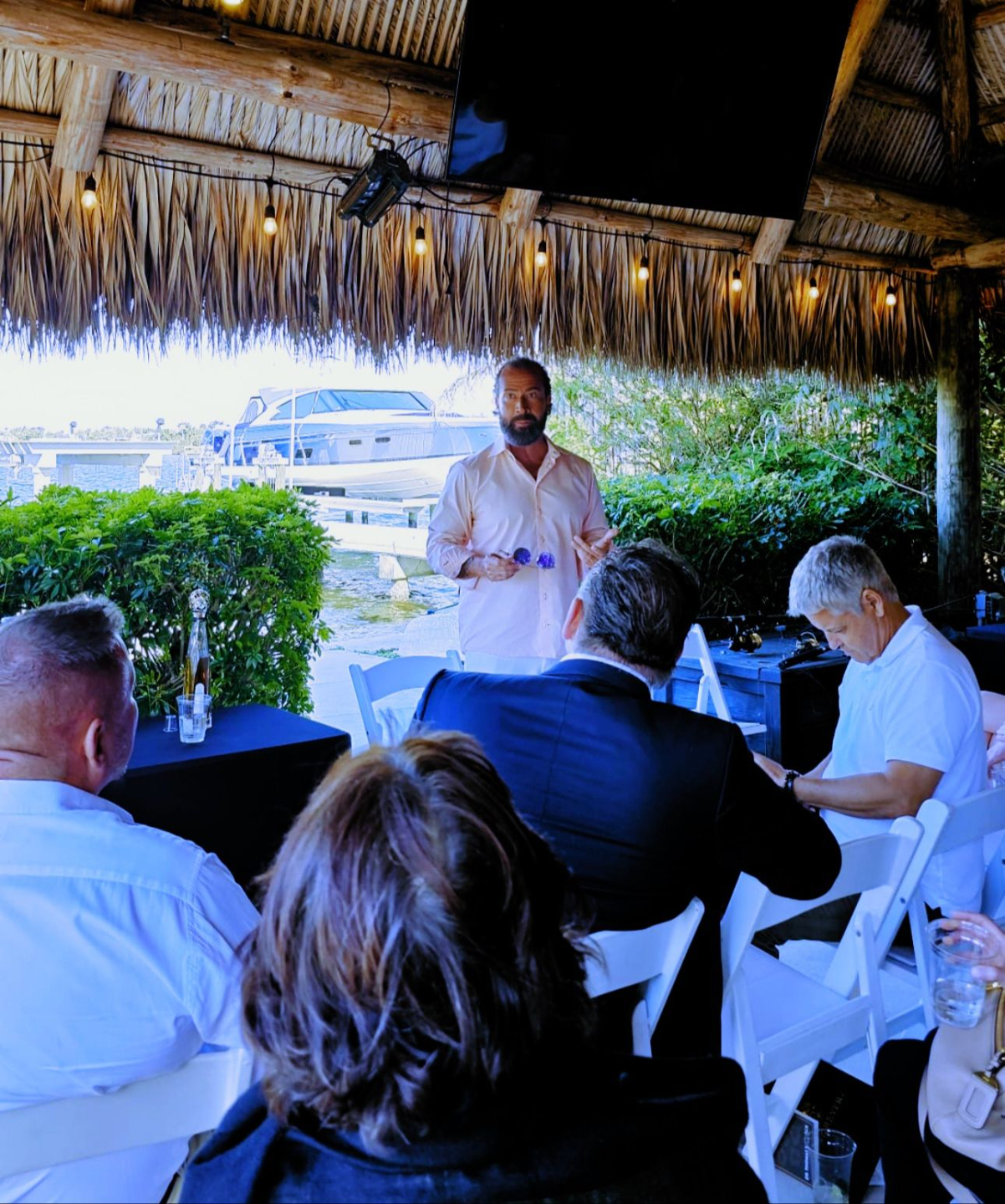
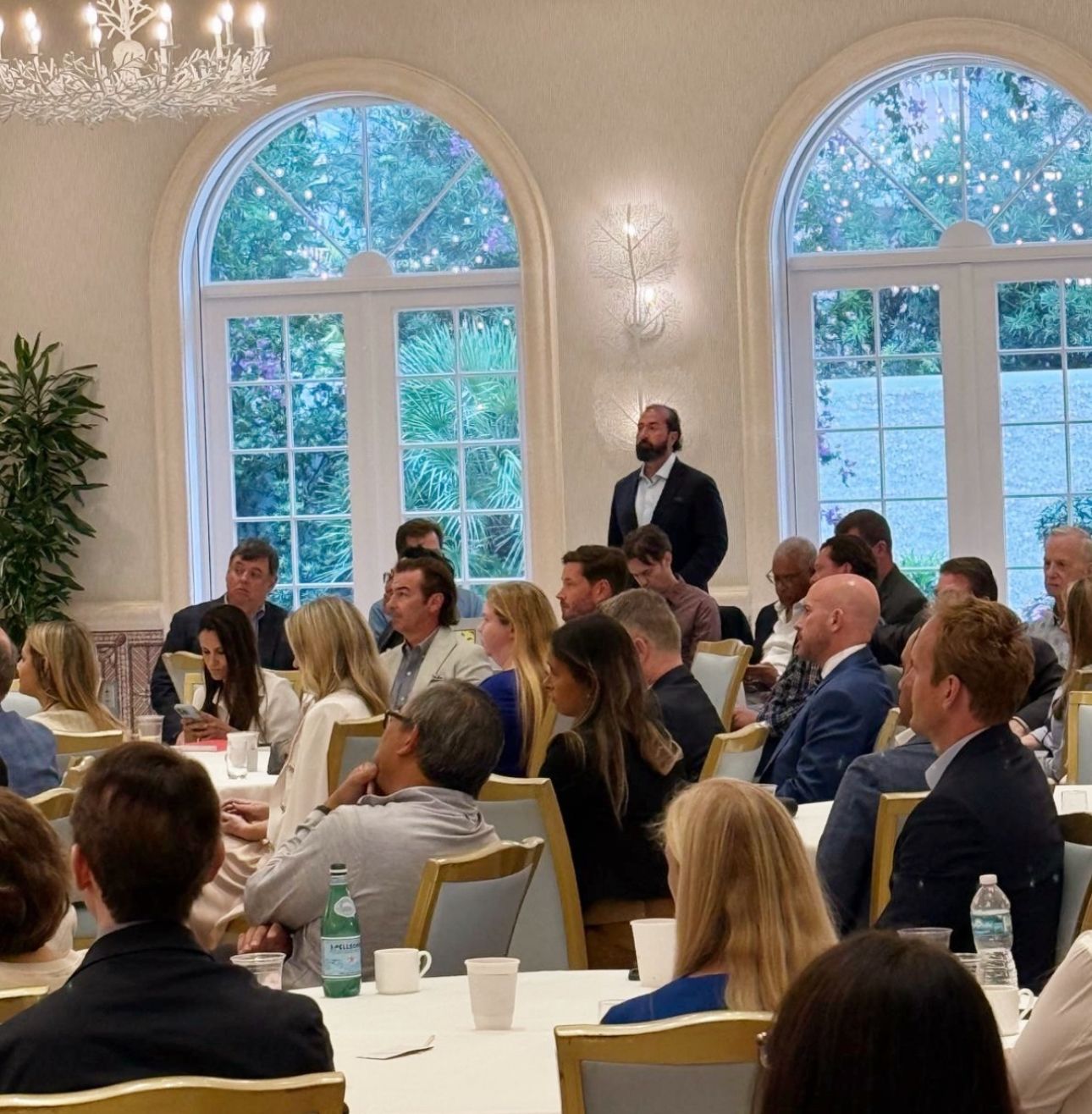
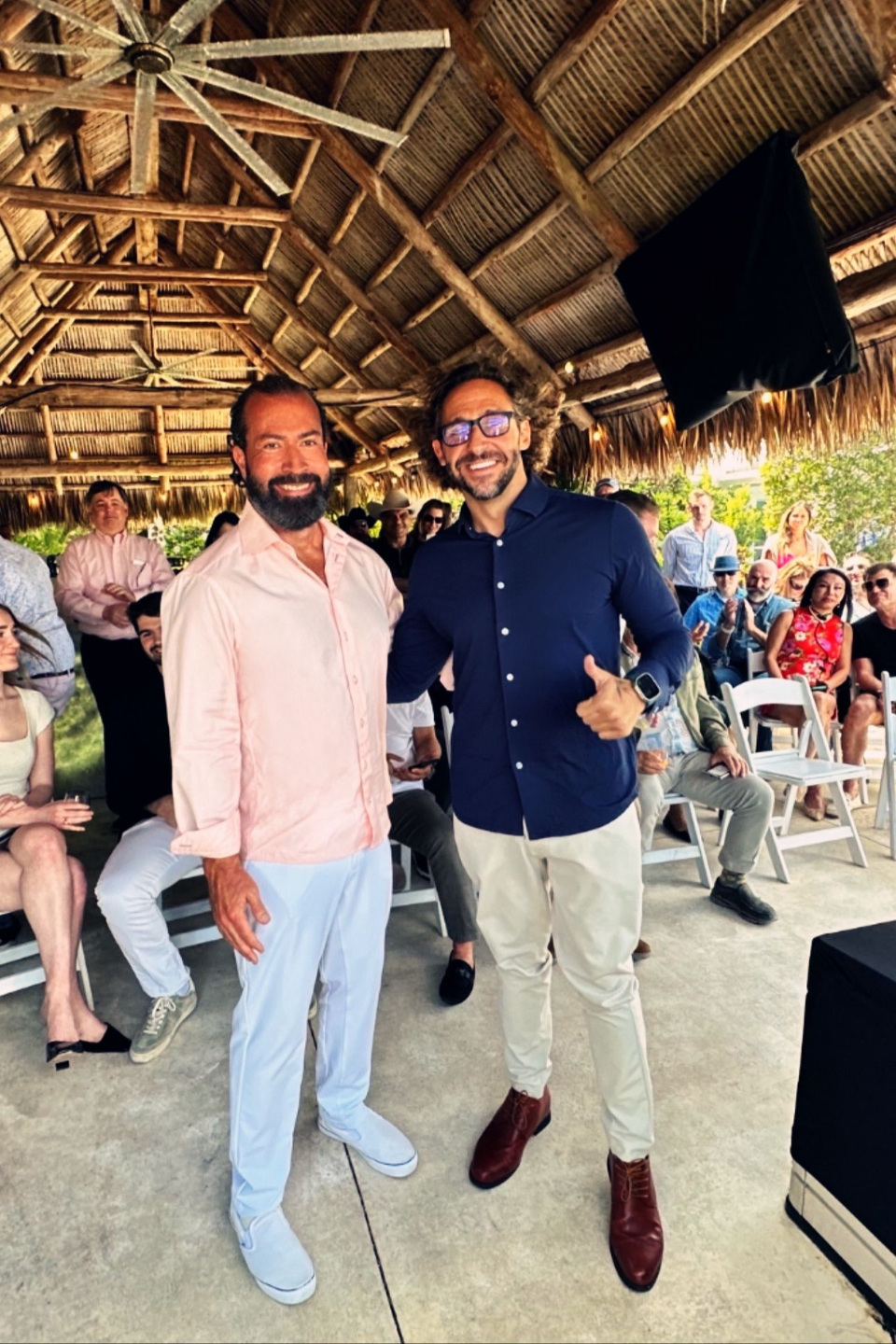
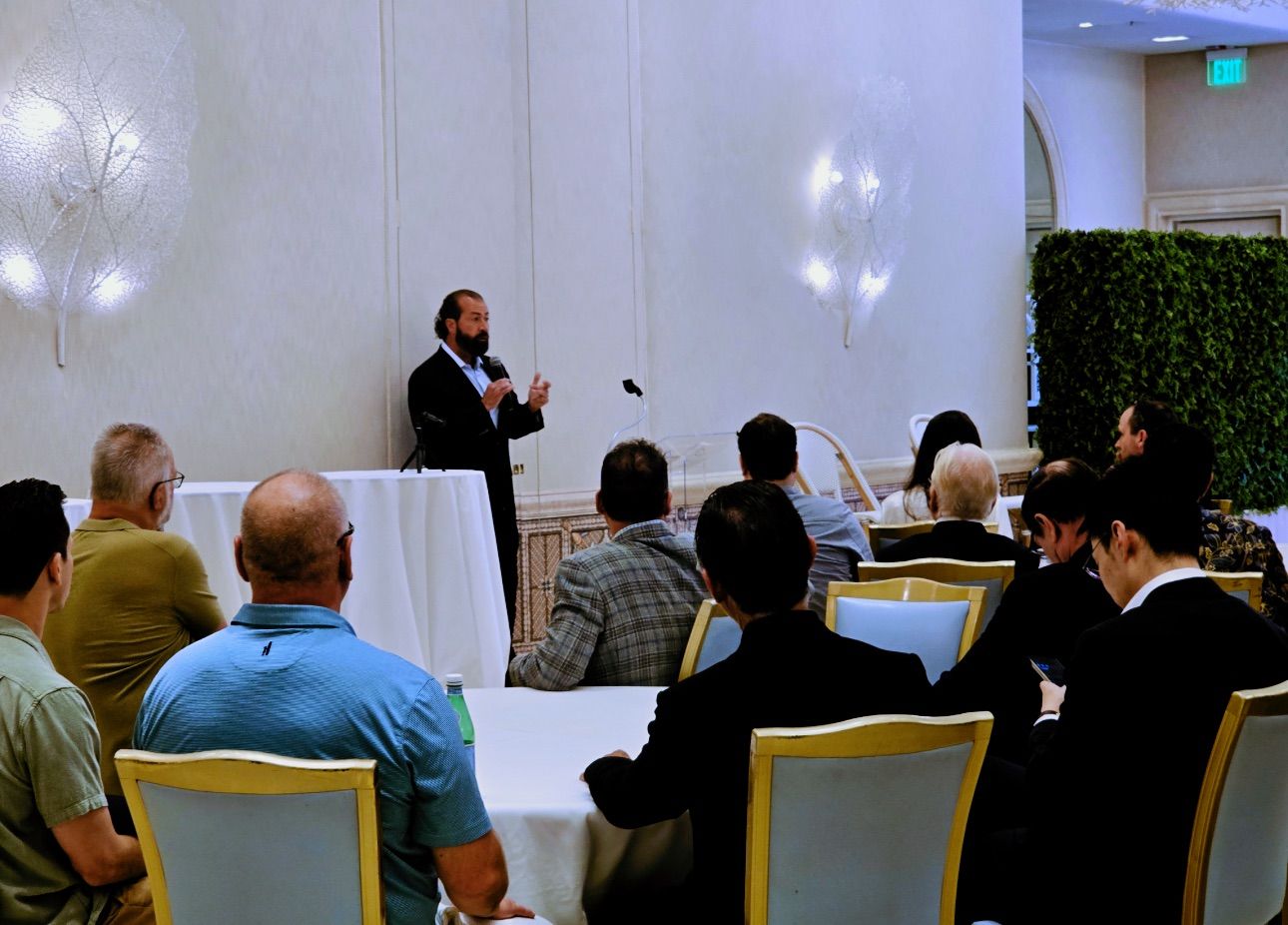
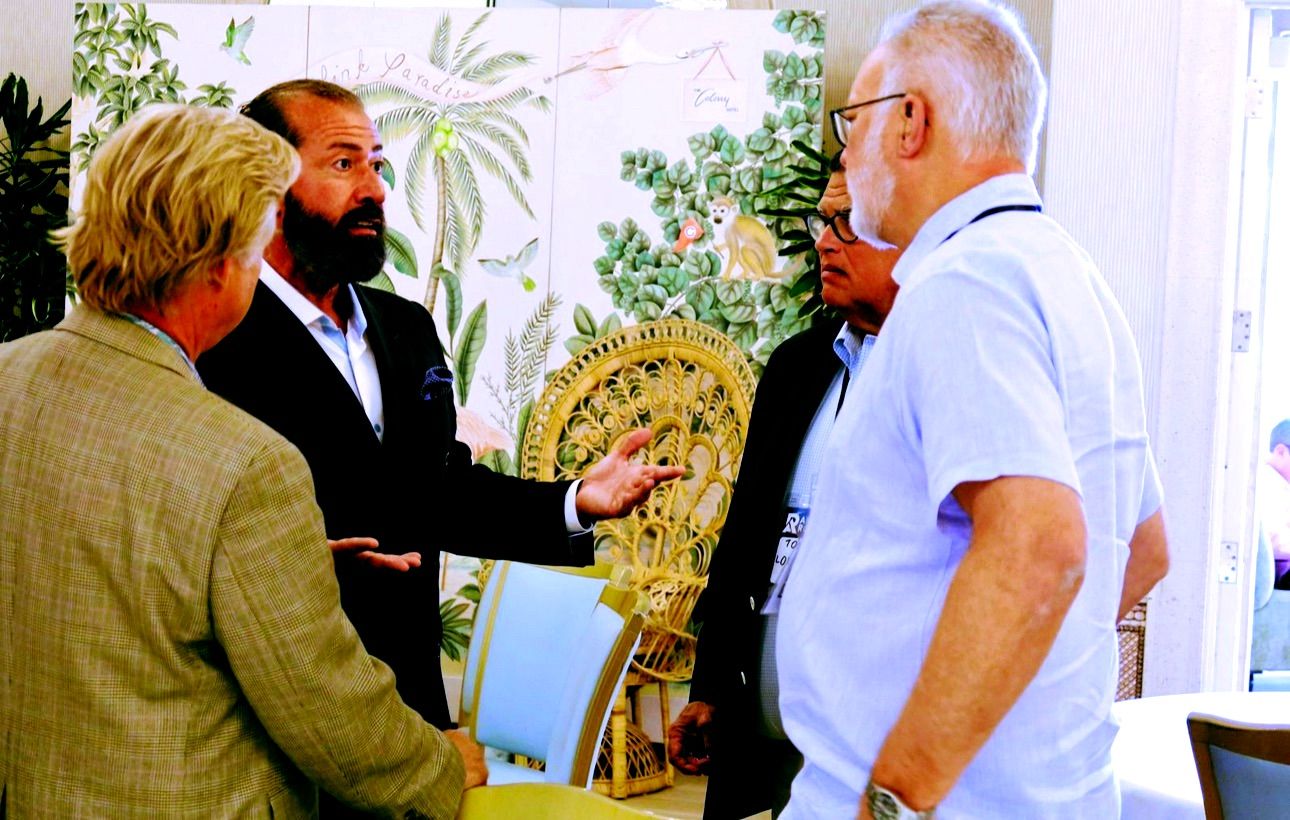
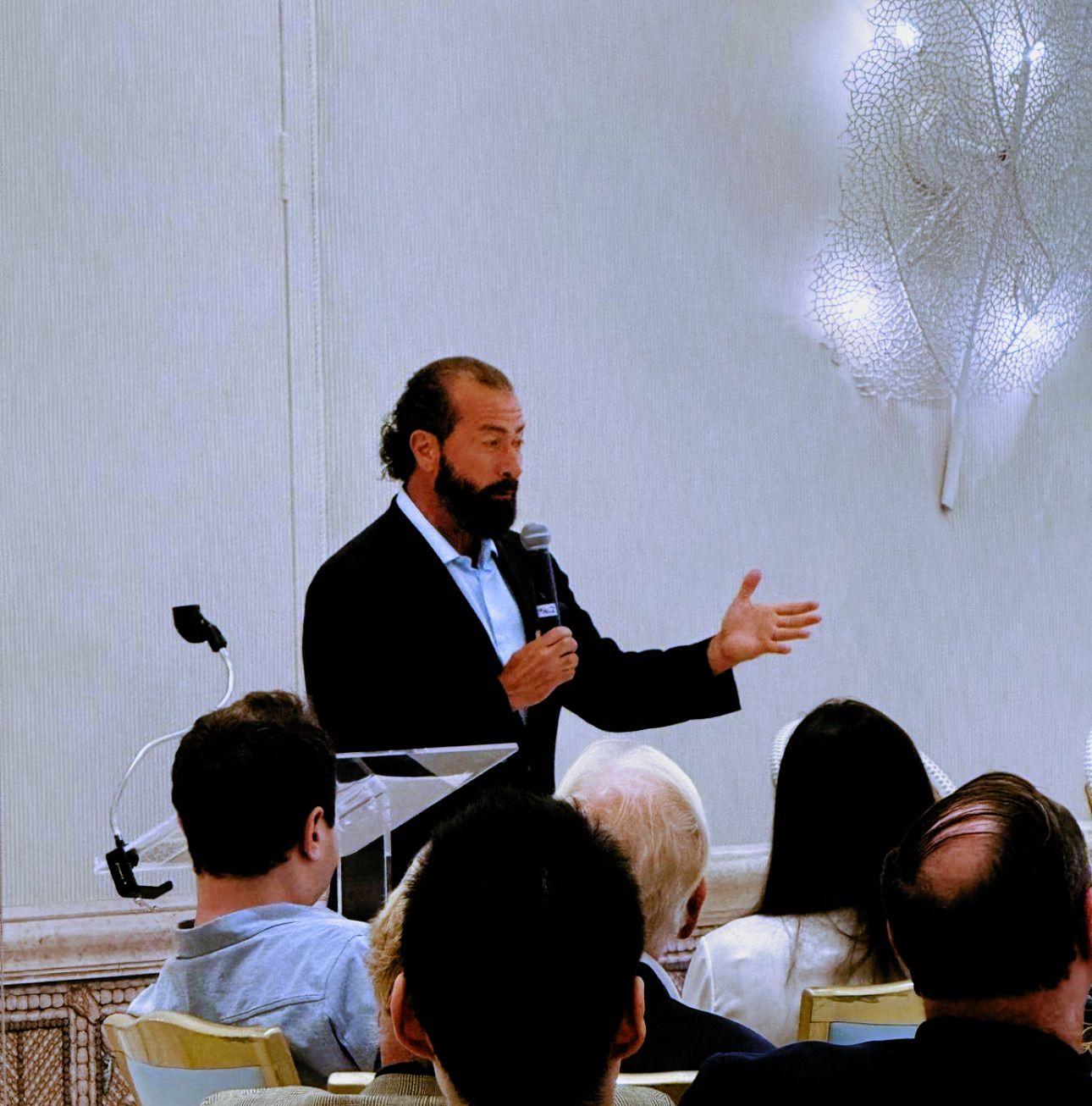
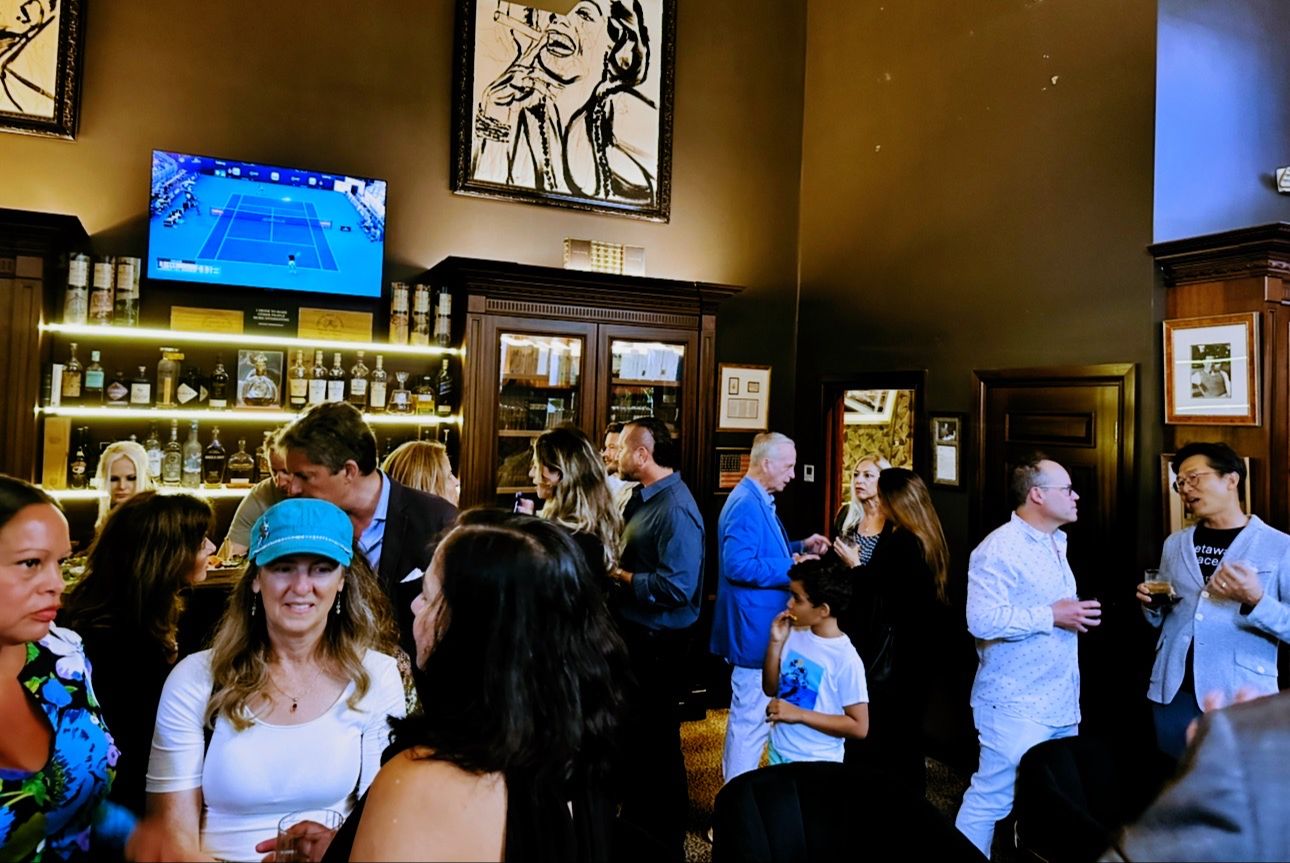
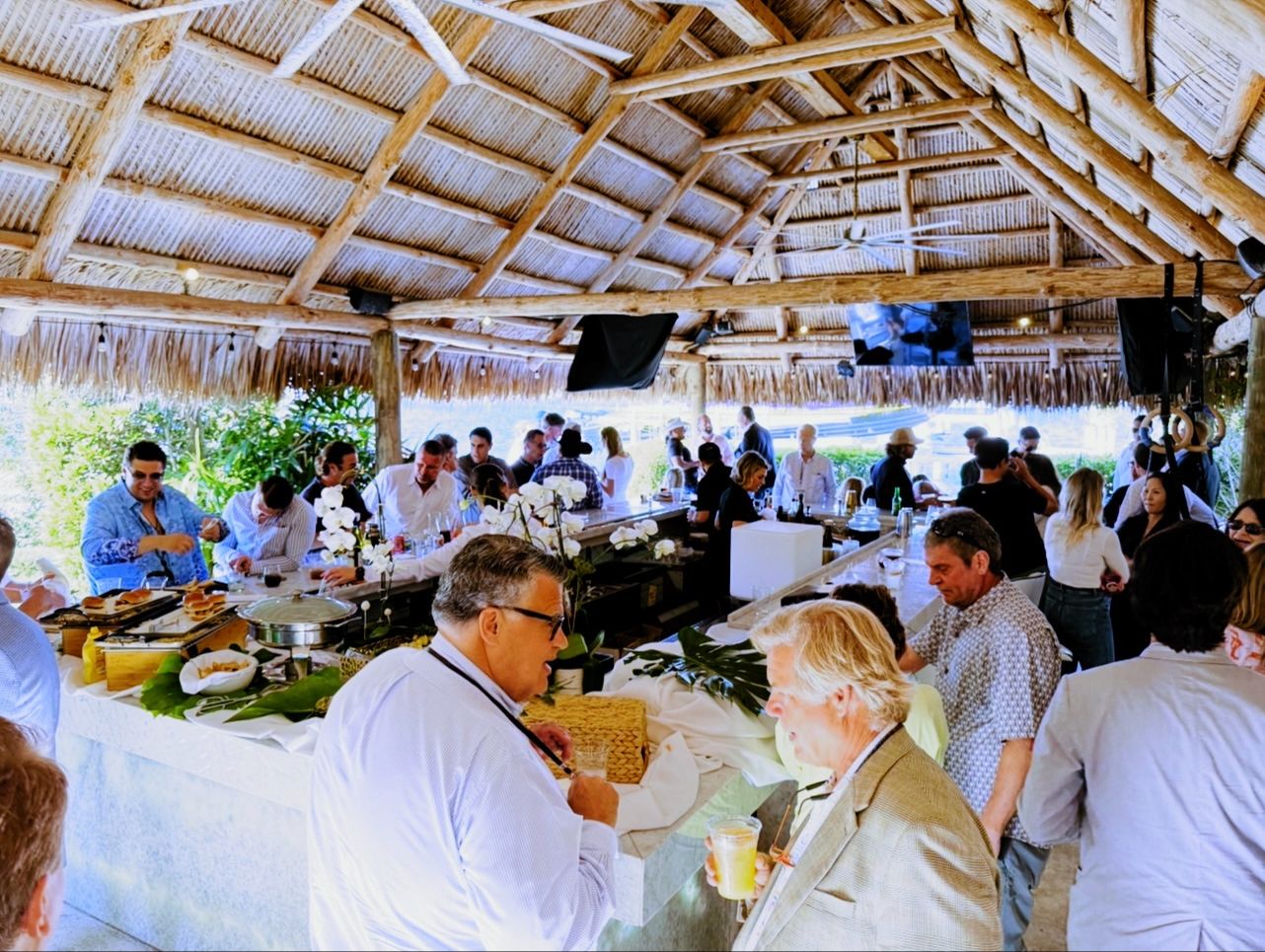
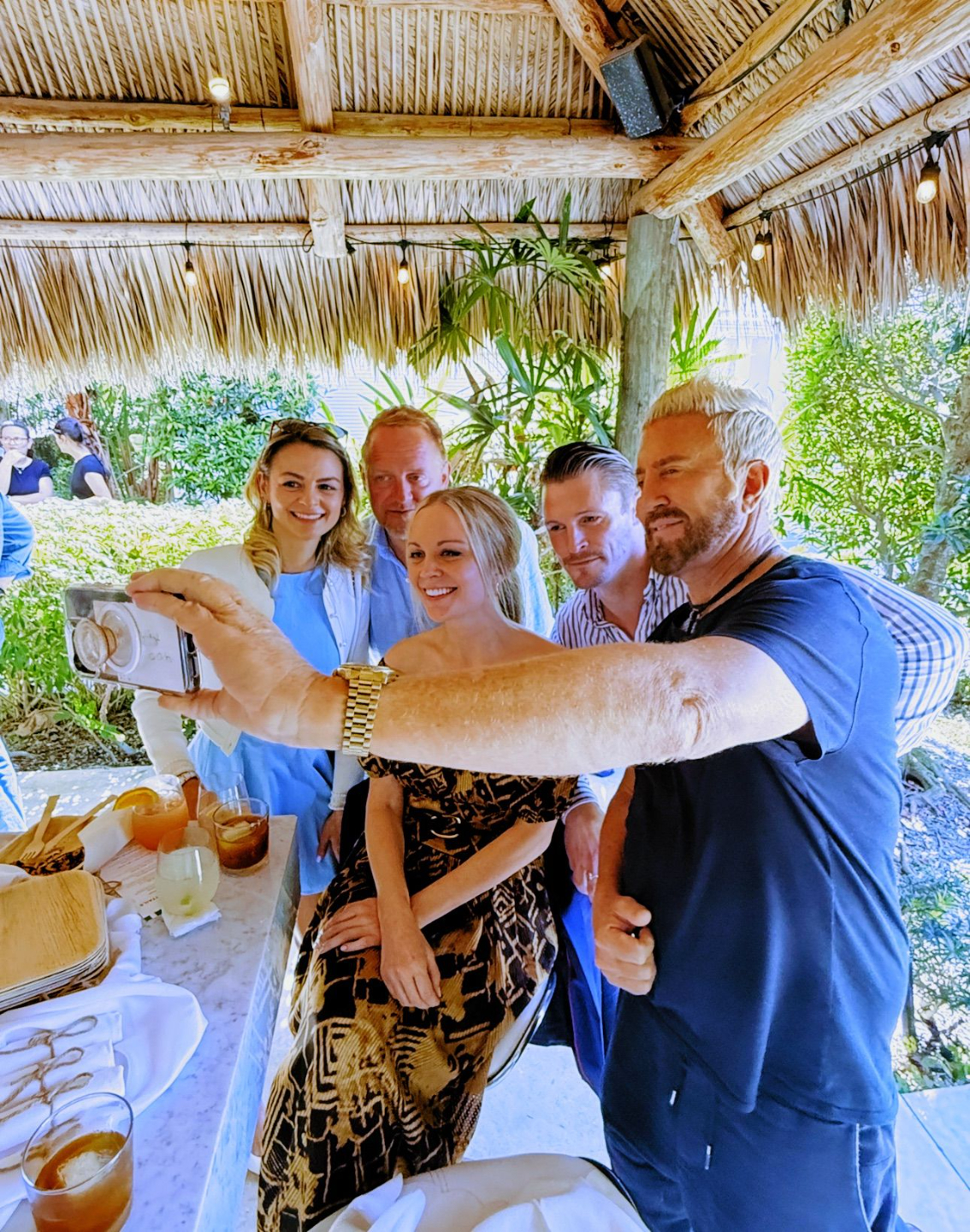
Real Pictures from Angelo Robles's 2025 Palm Beach Single Family Office Forum